
There are many benefits of adding a pond to an allotment for plot holders and it doesn’t need to take up a significant amount of space. In the London Borough of Richmond upon Thames, allotment holders are permitted to create pond on their plots using a liner or existing container e.g. old butler sink.
At East Sheen allotments we are encouraging every plot holder to add a pond to their allotment, in line with the aims of our Biodiversity Action Plan. We currently have over 50 ponds across allotment sites in the area, which support a number of protected species and those of conservation concern, including common frogs, common newts and grass snakes. Over the last three months we have already seen five new ponds added to plots by allotment holders.
In 2025 we have undertaken a site wide survey of ponds and found that many are used for breeding by common frogs and smooth newts. We are collaborating with local conservation groups to connect our green spaces and provide corridors to increase dispersal opportunities for our amphibian species.
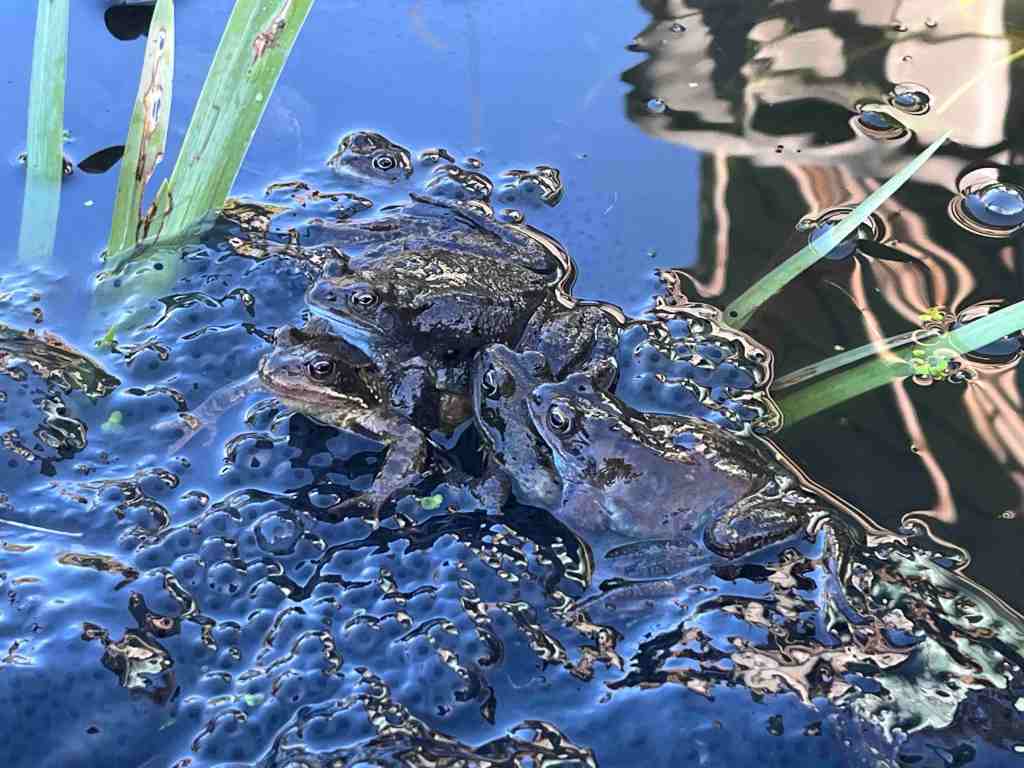
Benefits of having a pond on your plot:
- A habitat for wildlife – ponds are one of the most important habitats for wildlife, especially in urban areas. They provide vital refuges for some of our protected species, (e.g. toads), and stepping stones across a wider fragmented landscape to allow species to move between suitable breeding and terrestrial habitats.
- Pest control – ponds attract a variety of wildlife, including birds, predatory insects and amphibians. All these species help with pest control of your crops, reducing the need for manual or chemical pest control.
- Pollination – ponds attract pollinating insects, for example bees and hoverflies, which are attracted to water sources which contain minerals to drink. This will help to increase your crop yields e.g. tomatoes.
- Aesthetic appeal – ponds are a nice addition to your plot, enhancing the visual appeal of a plot.
Top tips for building an allotment pond:
- Select a suitable location – ponds need sunlight but also some shade. Aim for at least half the pond to receive full sun and avoid placing it under a tree due to leaf fall. Choose a level area without obstructions such as tree roots. A spot at the back of your plot where it is quieter will be more beneficial for wildlife.
- Pond size and shape – a shallow entrance to the pond is vital, so that creates can drink and get in and out easily. It’s also worth including some branches or wood at the deeper end. Include shelves to place pond plants. Include an section in the centre that is at least 60cm deep so that amphibians can over winter and to encourage toads to spawn.
- Construction – place a layer of sand and/or purpose-made underlay beneath the liner to protect it from sharp stones and extend the lifespan of the liner. Use a flexible liner, ensuring it is securely held in place and trimmed at the edges. When filling the pond with water, try to use water from your water butt. Fold creases in the liner as your fill it with water. Edge your pond with pebbles and logs, to create microhabitats and protect emerging animals. See the list of suppliers below for where to purchase materials and an example allotment pond below.
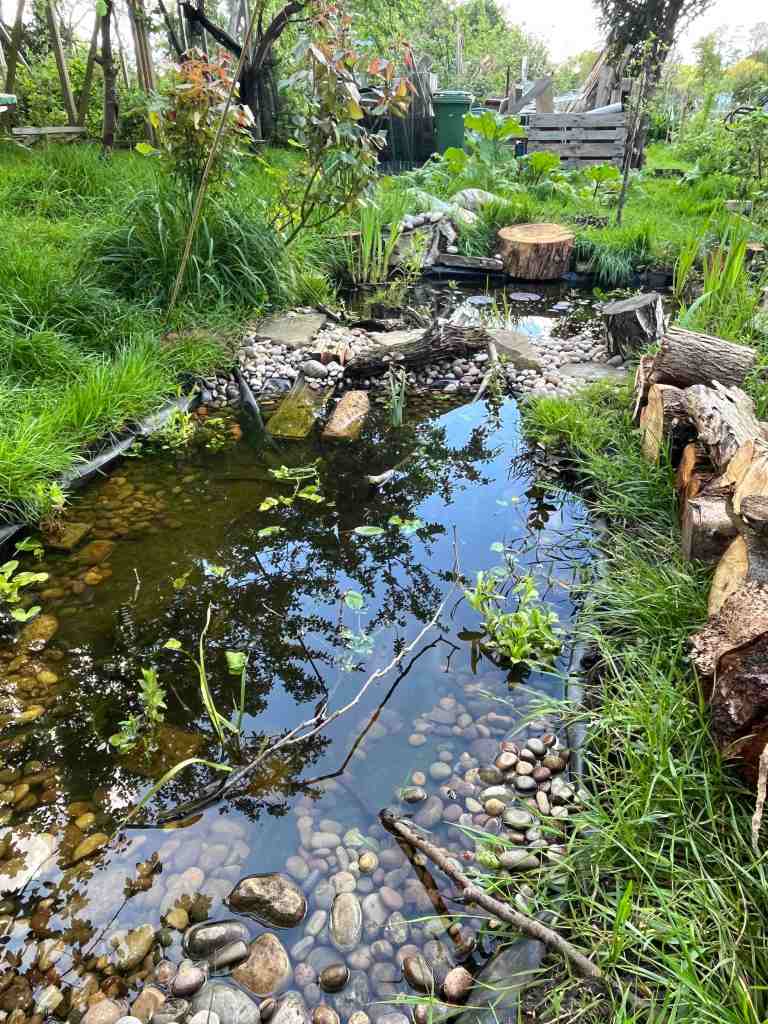
- Planting – use native plants where possible. Your are likely to find that your allotment neighbours have spare plants they can share with you to get your pond started, otherwise see the list of suppliers below. Key plants to add are oxygenators (float under the surface of the water), emergents (e.g. lilies, flag irises), rafters (float on the surface, e.g. watercress) and marginals (sit on the shelves around the edge of a pond). For a full list of plants, see below.
How to construct an allotment pond
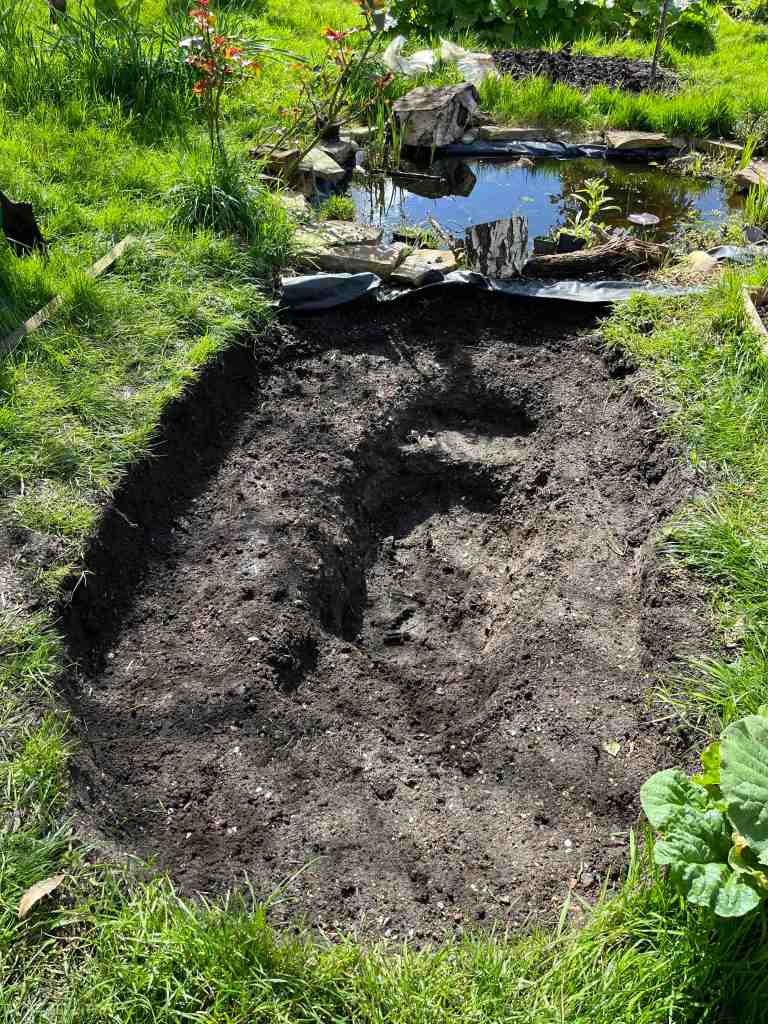
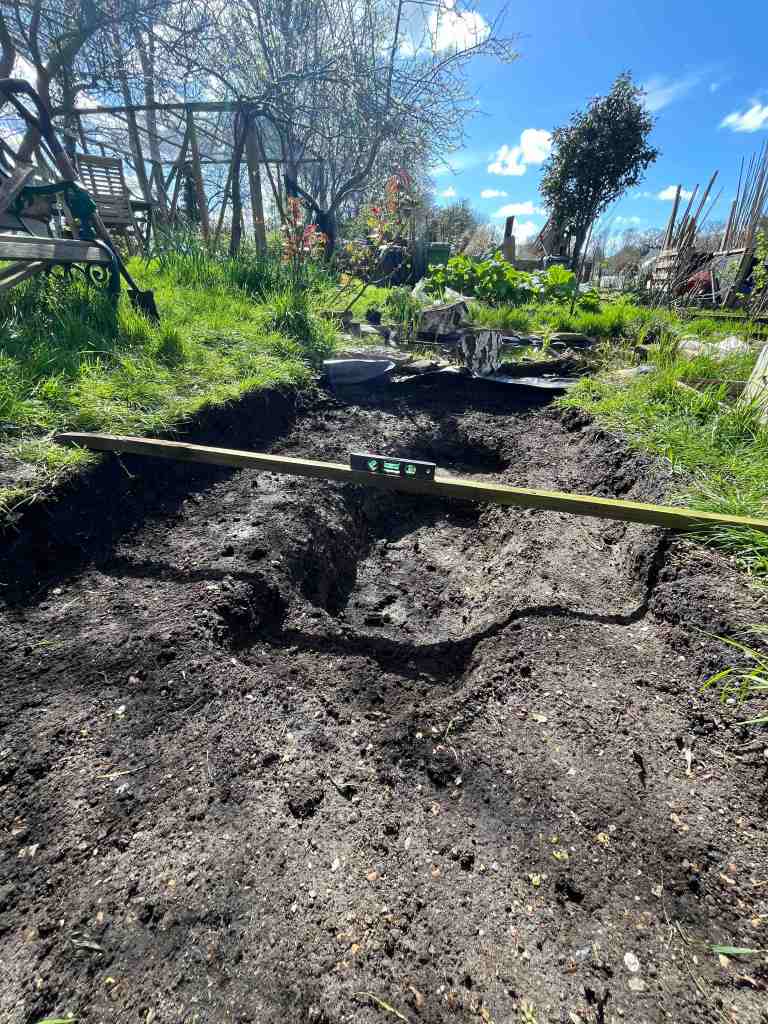
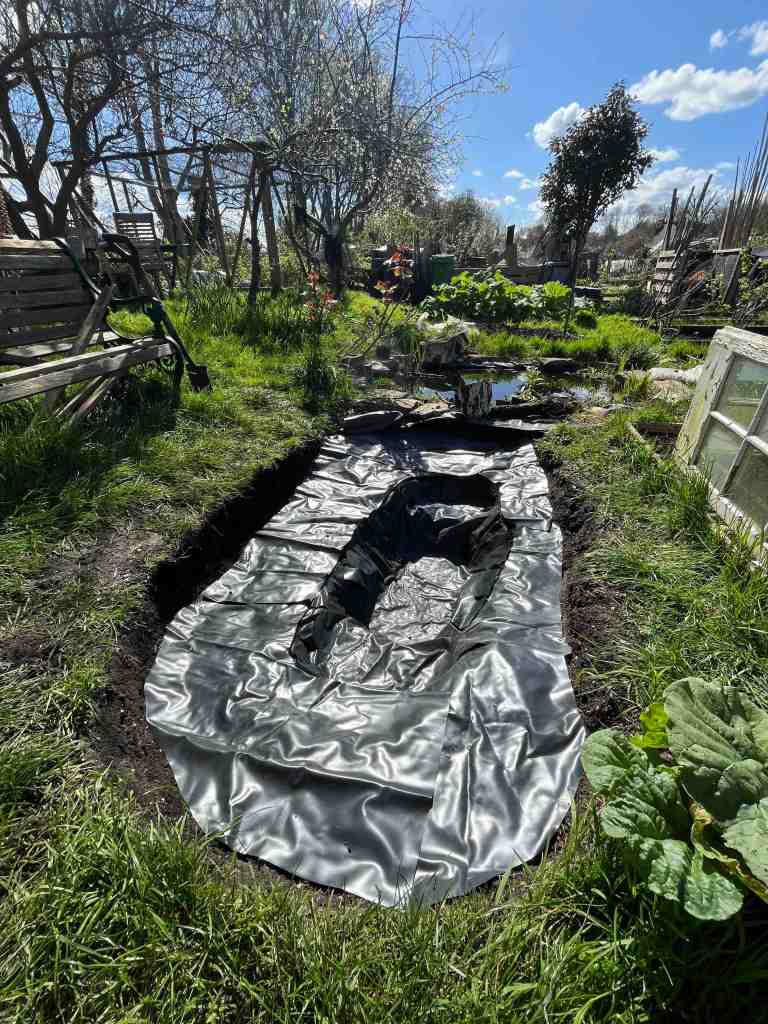
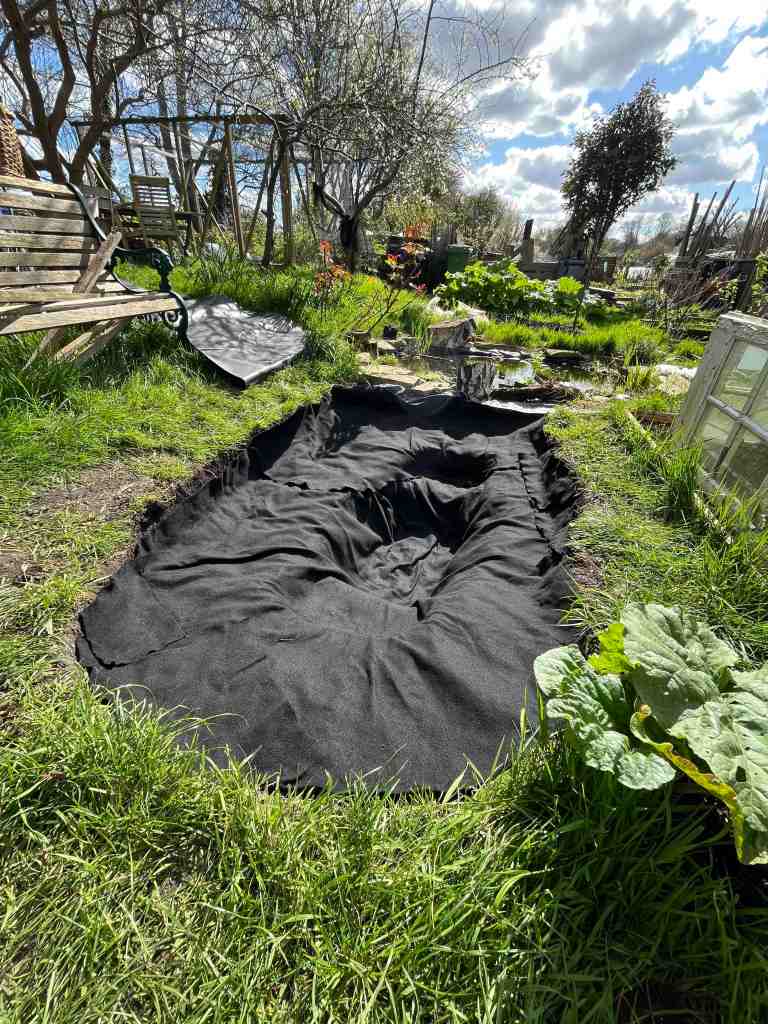
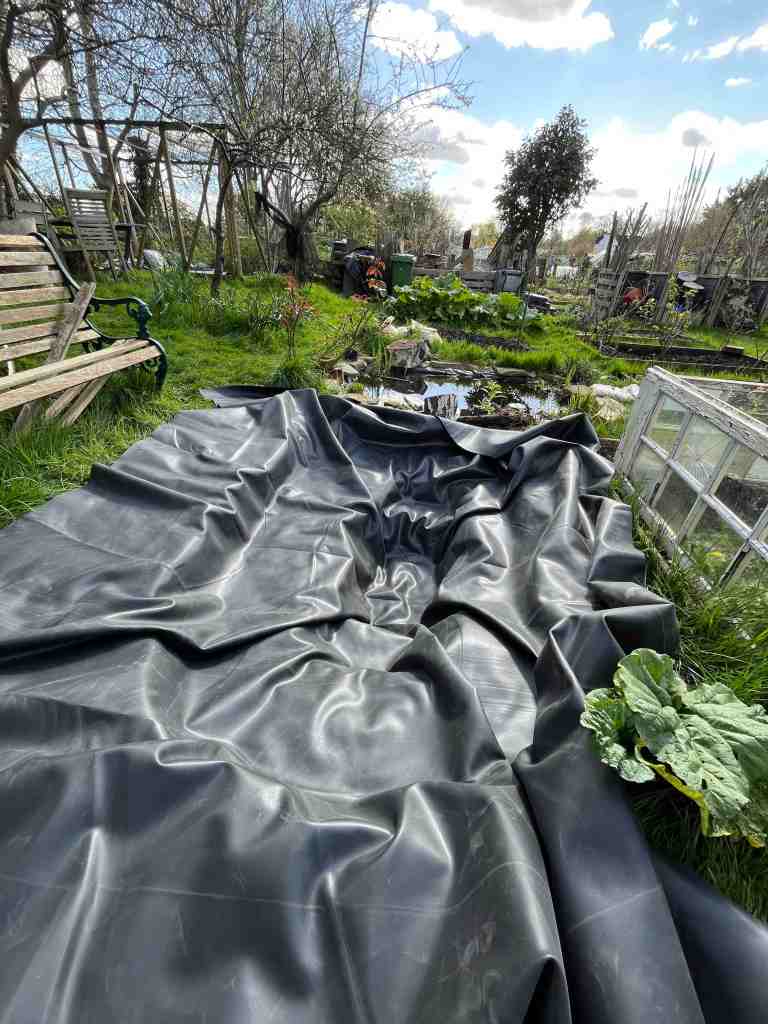
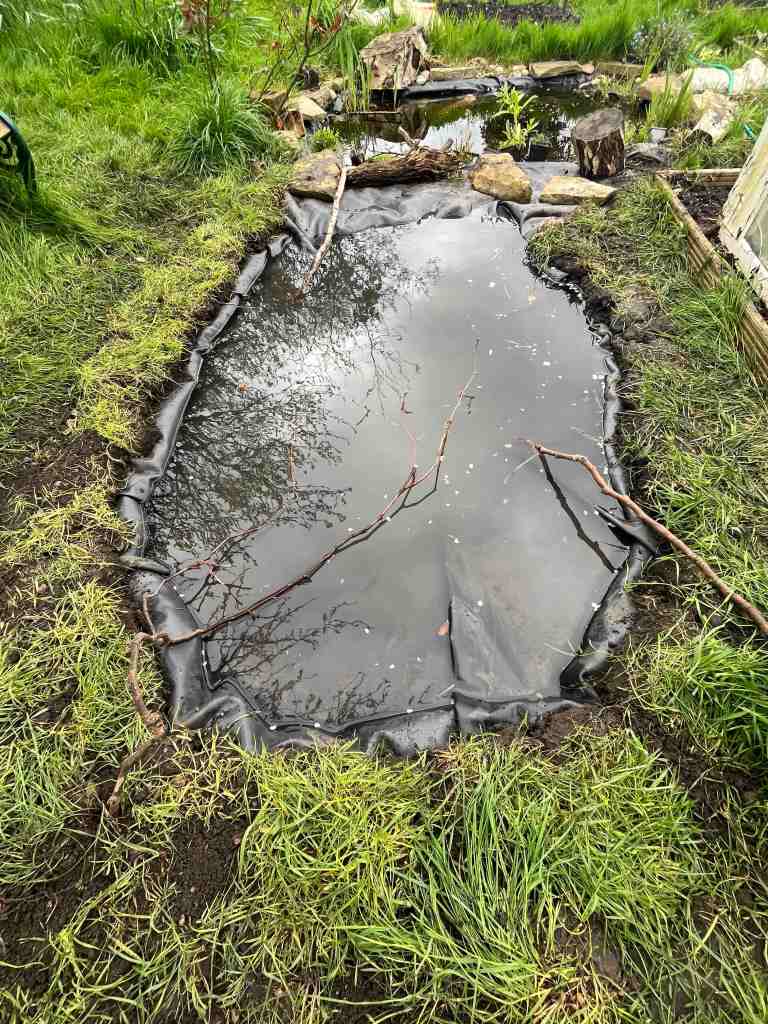
Pond after 1 year.
Recommended pond plants
Emergent/ deep shelf
- NYMPHAEA sp. (dwarf water lily)
- IRIS PSEUDACORUS (Flag Iris)
Oxygenating weed
- CERATOPHYLLUM DEMERSUM (Hornwort)
Rafters
- RANUNCULUS AQUATILIS (Water Crowfoot)
Shallow shelf at the margin
- MENTHA AQUATICA (Water Mint)
- MYOSOTIS SCORPIOIDES (Forget me not)
- CALTHA PALUSTRIS (Marsh Marigold)
Around the edge of the pond (like damp soil):
- GEUM RIVALE (Water Avens)
- LYCHNIS FLOS-CUCULI (Ragged Robin)
- LYTHRUM SALICARIA (Loosestrife)
- SUCCISA PRATENSIS (Devils Bit Scabious)
Extras
Mini straw bales for helping to control algae growth in new ponds.
Watercress: buy a punnet of organic watercress from your local supermarket and just throw it into the pond (John Hurd’s is a popular brand).
Suppliers of pond plants and materials
Waterside nursery: https://www.watersidenursery.co.uk/
Lincolnshire pond plants: https://www.lincsplants.com
Pond liners and underlays: https://bradshawsdirect.co.uk/pond-liners/ and information on which liner to choose.
Advice on maintaining or fixing a problem pond – we are here to help, please email info@eastsheenallotments.com and we can offer friendly advice on keeping your pond in good condition.
Additional resources
 BHAS Allotment Society