
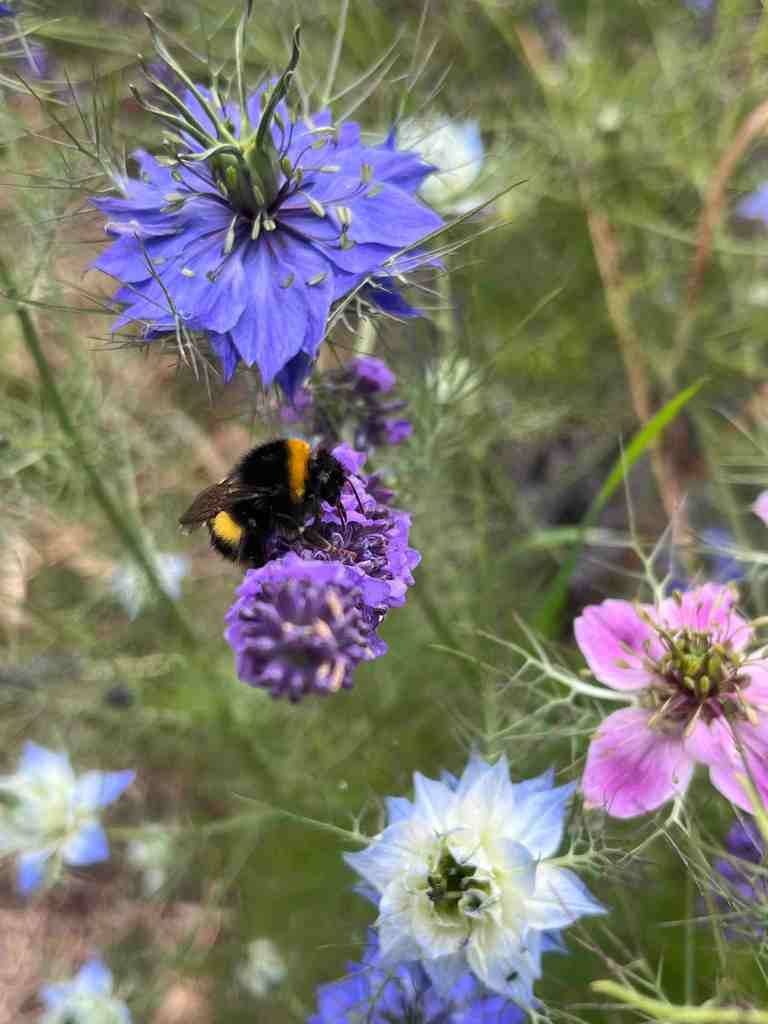
Following on from requests at our AGM, we have put together a list of native plants which are good for pollinators. Attracting insects to your plot is essential to pollinate vegetables, flowers and fruits. Beneficial insects can also help to manage other insects which can cause damage to crops, such as aphids and caterpillars. Some can also be harvested as cut flowers or for salads and fertilisers.
Common Teasel Dipsacus fullonum
Viper’s bugloss Echium vulgare
Common Fennel Foeniculum vulgare (herb)
Meadow Cranesbill Geranium pratense
Corn Marigold Glebionis segetum (companion plant and edible flowers)
Orpine Hydrotelephium telephium
Wild candytuft Iberis amara
Field Scabious Knautia arvensis
Ox-eye daisy Leucanthemum vulgare
Thift Armeria maritima
Lesser calamint Calamintha nepeta
Common or Greater Knapweed Centaurea nigra / C. scabiosa
Tansy Tanacetum vulgarem (companion planting)
Common Honeysuckle Lonicera periclymenum
Ragged Robin Lychnis flos-cuculi
Yellow Loosestrife Lysimachia vulgaris
Purple Loosestrife Lythrum salicaria (can also be grown at a pond margin)
Water mint Mentha aquatica (in up to 10cm of pond water)
Wild majoram Origanum vulgare (herb)
Common Poppy Papaver rhoeas
Blackberry Rubus fruticosus agg. (fruit)
Common Raspberry Rubus idaeus (fruit)
Bugle Ajuga reptans
Marsh Marigold Caltha palustris (in up to 10cm of pond water)
Water avens Geum rivale (bog plant)
Primrose Primula vulgaris
Wild & edible charries Prunus avium (fruit)
Common redcurrent Ribes rubrum (fruit)
White clover Trifolium repens (cover crop)
Foxglove Digitalis purpurea
Stinging Nettles Urtica dioica (soup and fertiliser)
Blackthorn Prunus spinosa (sloes)
Dog Rose Rosa canina (rosehips)
Common Comfrey Symphytum officinale (fertiliser)
Stinking Hellebore Helleborus foetidus (can plant in shade, early source of pollen)
 BHAS Allotment Society